The results are in from NBS’ latest survey into specifications, and after receiving over 500 responses, it provides some true insight into the current role and future of specifications.
“When we last ran this survey in 2013, we knew that the industry was in a period of transition,” said Richard Waterhouse, Chief Executive of NBS.
“Running the survey again after three years, we’ve seen that specifications are evolving along with the industry, towards more collaborative and digital ways of working.”
It’s clear from the survey that specifications continue to be created for a range of reasons, most commonly to set out expectations and performance criteria for a project.
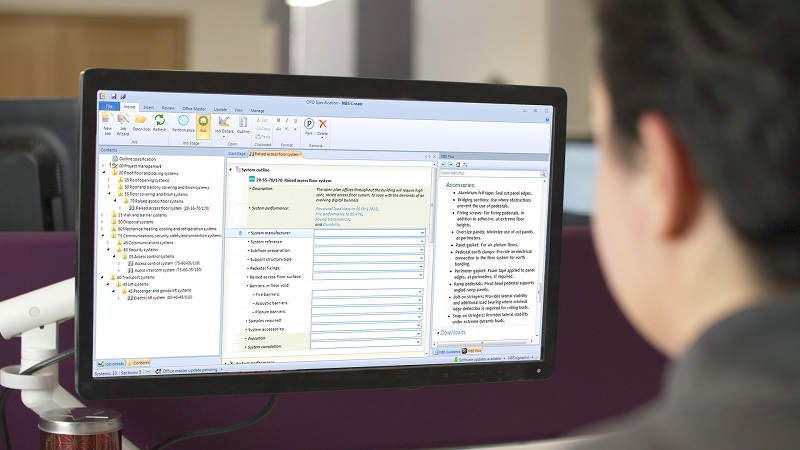
Over 70 percent of those surveyed said that writing project specifications was part of their day-to-day working life, and there has been an increase in the percentage of people starting specifications earlier.
“As an industry we’re slowly moving towards a lifetime specification and we’ve started to see small, encouraging increases in parties co-owning and co-creating their specifications – but there’s still a long way to go,” continued Richard.
Only a quarter of specifiers are sharing draft specifications with others within their own company and less – 11 percent – with those outside of their own company. However, this figure is up from three percent in 2013, confirming that collaboration is increasing but it is taking time.
Six out of 10 specifiers still admit to rushing the specification process and perhaps more disappointing is that 94 percent, up from 87 percent in 2013, are still experiencing difficulties when producing or using specifications.
Adrian Malleson, Head of Research, Analysis and Forecasting at NBS, said: “Rushing specifications is a huge risk when you consider the multiple roles of a specification – a risk that could lead to costly mistakes.
“Time and time again, we’re also seeing that substituted specified materials and inaccurate or incomplete technical data are two of the most common problems that specifiers continue to face when it comes to producing or using specifications.”
However specifications may or may not change in the future, it is clear from the survey that specifiers need and want there to be easy links between the specification itself, legislation and standards, and manufacturers’ product information.
Adrian continued: “At NBS, we offer a number of tools to help specifiers access standards, manufacturers’ product data and other information. Ensuring accurate and up-to-date technical data is becoming increasingly important as the industry continues to adopt BIM – this is something that we are doing here at NBS and will continue to develop and improve.”
Newcastle-based NBS provides technical information, specification and BIM tools to construction industry professionals including architects, engineers and surveyors as well as services for building product manufacturers.