The Royal Institute of British Architects (RIBA) has published new research urging the Government to focus a new National Retrofit Strategy on updating 3.3m homes in England that were built between 1919 and 1939.
In 2021, 17% of households in interwar suburbs – from Kingstanding to Becontree – were in fuel poverty, proportionally higher than the overall national rate of 13%.
Largely due to their poor insulation, solid wall construction, and high gas reliance, many interwar homes leave residents vulnerable to soaring energy prices.
Only 10% of interwar homes achieve an Energy Performance Certificate (EPC) above Band C. If current Band D rated homes were retrofitted to achieve Band C performance, households would save £483 per year under the 2022 energy price cap.
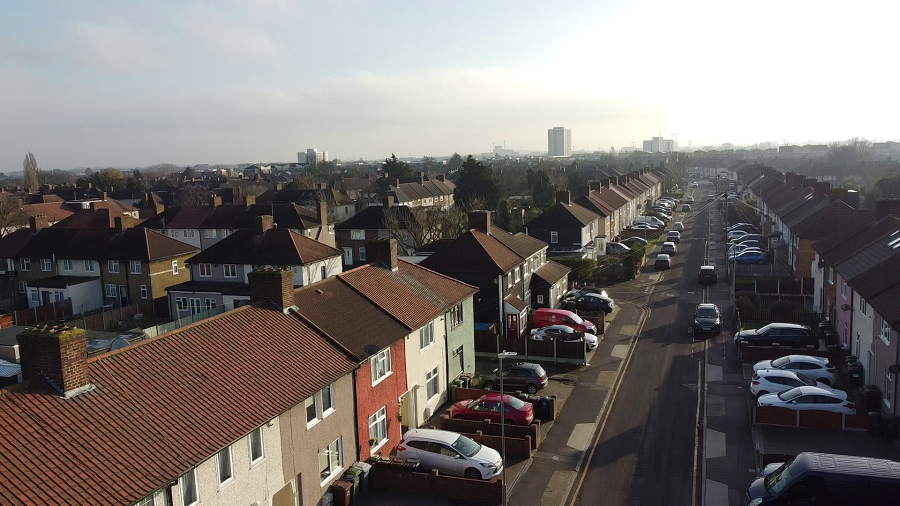
Photo: Orchard Road, Dagenham - Zinc Media
The carbon emissions released from England’s 3.3m interwar homes that have not been privately retrofitted currently account for 12% of the total 77m tones of C02 produced each year by the country’s housing. By improving their energy efficiency, the Government would not only accelerate progress towards statutory fuel poverty targets, but reduce England’s total carbon emissions by 4% – the same amount as completely decarbonising its waste and recycling sector.
The Homes for Heroes report sets out how a ‘fabric-first’ retrofit strategy could be achieved, from insulating walls to effectively deploying heat pumps, and outlines effective funding mechanisms – from tax levers, to grants, to allowances for landlords.
It also demonstrates how a National Retrofit Strategy could create thousands of green jobs. Through the installation of external insulation to all of England’s interwar homes alone, the Government could generate 5,000 full time jobs every year for the next ten years.
RIBA President, Simon Allford, said: “Houses built in the interwar period have rightly gained a reputation for being highly desirable, spacious family homes in vibrant suburban communities, but their age and construction leave residents vulnerable to extreme fuel poverty.
They require urgent retrofitting, and this is highly achievable, as their uniformity favours mass customisation. Indeed these interwar homes present a real opportunity to gain ground when it comes to retrofitting our housing stock.
“By regenerating these homes, we can improve the health and wellbeing of those in fuel poor households, significantly reduce carbon emissions, and set a precedent for local authorities, housing associations, landlords and homeowners up and down the country. We urge the Government to rise to this challenge by breaking down financial barriers, overcome technical challenges and boost consumer confidence.”