A new report published in partnership between McKinsey & Company and the World Economic Forum reveals that the construction sector’s carbon dioxide emissions - from building to real estate to infrastructure - can be reduced by up to 75% or 4 gigatons of carbon dioxide by 2050 through the establishment of a circular economy.
The report has found that circularity also presents substantial economic advantages, with the potential to yield an annual net profit gain of up to $46 billion by 2030 and $360 billion by 2050.
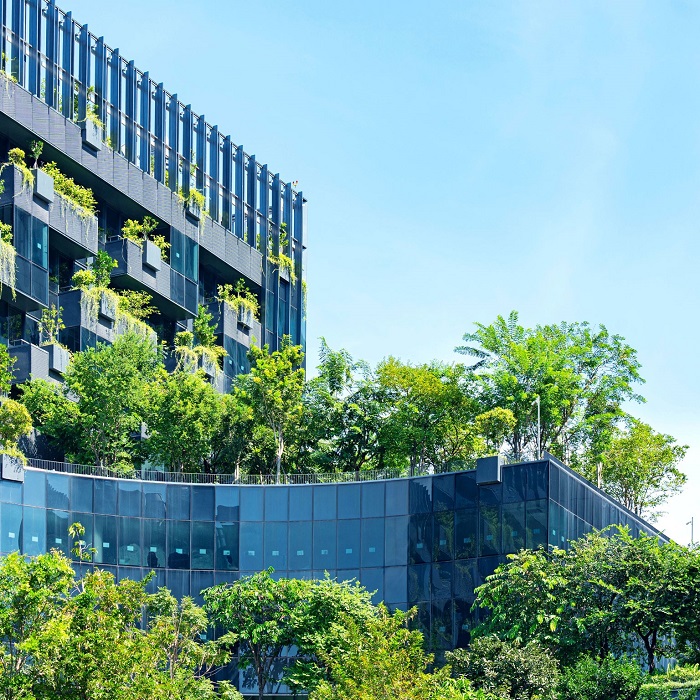
As the population grows and urbanization accelerates, 30 billion square meters of new buildings will need to be constructed in the next 40 years – similar to building the equivalent of New York City every 40 days. Most of this growth will occur in emerging markets including Africa, the Middle East, and Asia. Creating a sustainable and resilient built environment is crucial for people’s well-being and to stay within safe planetary limits. "The construction sector is a crucial industry for reducing greenhouse gas emissions in the long term," says Sebastian Reiter, partner in the Munich office of McKinsey and co-author of the study. "One-third of material consumption and 26% of global carbon dioxide emissions come from this sector. At the same time, this sector employs 7% of people globally and accounts for 13% of economic output."
The report considers the potential for carbon dioxide abatement and potential net value gain for six key building materials: cement and concrete, steel, aluminium, plastics, glass and gypsum.
Key findings include:
- Circular loops could abate up to 4 gigatonnes of CO2 (Gt CO2) in 2050.
- In 2030, recirculation of materials and minerals and CCS/CCU are each expected to contribute around 40% of total abatement.
- Circularity in cement has the potential to create the highest value pool across materials, with an estimated net value gain of $10 billion in 2030 and $122 billion in 2050.
In conclusion, Jukka Maksimainen, senior partner in the Helsinki office of McKinsey and co-author of the report notes: "Our analysis of the construction sector shows an extraordinary potential for circularity - not only through carbon dioxide savings but also on a financial level. Nevertheless, we see hardly any solutions in the market that address this issue at scale yet – this makes it even more essential that we identify scalable solutions and make them visible.”
To download the report: Circularity in the Built Environment: Maximizing CO2 Abatement and Business Opportunities, please see here.