New guidance to help the construction industry make a sustainable choice of concrete and accelerate progress towards Net Zero targets has been published by BSI.
Lower Carbon Concrete – Alternative Binder Systems – Code of Practice (BSI Flex 350 Version 2) recommends and demonstrates the potential of lower carbon technology. It offers advice on assessing appropriate alternative binder systems (ABS) that can be used as lower-carbon concrete alternatives.
This BSI Flex recommends a framework for assessing ABS concretes to facilitate their acceptance as suitable alternatives to the commonly used Portland cement-based concrete when designing and building structures. While this BSI Flex is focused on the application of ABS concrete within the United Kingdom, it provides a helpful guide for other countries when considering the use of ABS concrete.
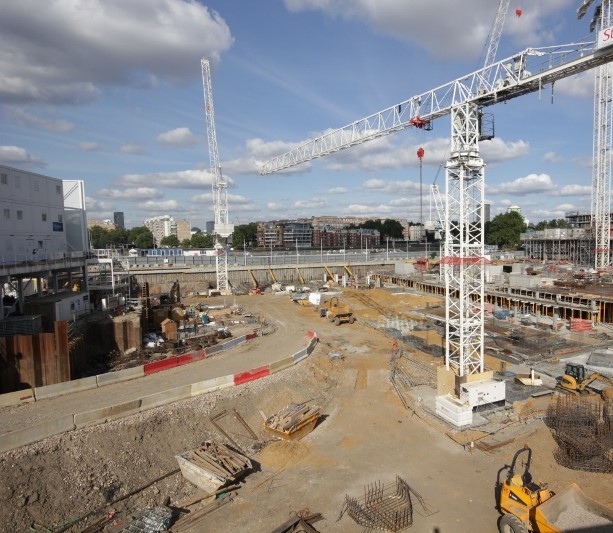
The UK consumes 11.7 million metric tonnes of Portland cement per year according to the European Ready Mixed Concrete Organisation, and as quoted in the ICE Low Carbon Concrete Routemap. This results in the emission of millions of metric tonnes of CO2 , accounting for nearly 90% of the greenhouse gas emissions associated with concrete production. ABS can be used to significantly reduce the emissions from the concrete binder compared to Portland cement while continuing to provide the many benefits of concrete construction.
The guide has been devised to help engineers and designers to specify and construct using low carbon technologies, by providing relevant background, recommendations, explanations, guidance and suggestions. Low carbon technologies are designed to produce less pollution than traditional ones and to help reduce greenhouse gas emissions. These technologies will include, but are not limited to the lower carbon concrete binder alternatives, which includes geopolymer (GPC) or alkali-activated materials (AAM).
Clare Price, Sector Lead, Built Environment, BSI said: “The built environment has a huge role to play in supporting the transition to net zero. This guidance is designed to empower engineers to make more sustainable choices in order to reduce carbon emissions in construction projects, while giving all involved the confidence in the suitability of chosen materials. Steps like this can help us create a sustainable built environment that serves the needs of people and planet.”
For more information on BSI Flex 350 Version 2, visit www.bsigroup.com