The National Rivers Consortium - a partnership of environmental specialists, engineers and construction professionals dedicated to improving water quality through nature-based solutions - has launched a major new initiative, a groundbreaking scheme that promises to unlock thousands of delayed housing developments while restoring the health of the nation’s waterways.
The scheme uses a Conservation Covenant to deliver nutrient neutrality mitigation and is the first of its kind in the UK using septic tank upgrades (STU).
It will allow developers to be able to directly purchase verified phosphorus and nitrogen credits, generated through STU. This has been proven as a practical and scientifically robust route to meeting nutrient neutrality rules across the UK.
The scheme is backed by RSK Biocensus, the habitat restoration and rewilding arm of the RSK Group, which became a Responsible Body under the Environment Act 2021 in early 2024. The initiative marks a major breakthrough in reconciling the urgent need for new homes with the equally urgent need to protect and recover biodiversity.
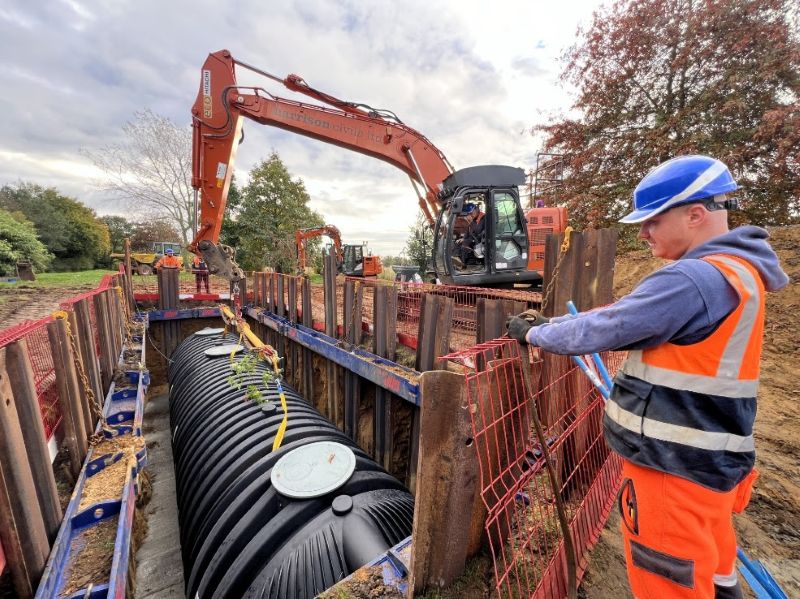
The Conservation Covenant approach to securing nutrient mitigation measures, with RSK Biocensus acting as Responsible Body, provides a streamlined approach, allowing the Local Planning Authority to be assured that the monitoring and enforcement obligations of the nutrient mitigation are fulfilled by a Secretary of State appointed Responsible Body, rather than having to take on this role themselves.
In many parts of the UK, housing and infrastructure projects have been halted because of excessive nutrient pollution entering sensitive river catchments. The NRC’s Conservation Covenant approach provides a transparent, regulated system that allows developers to offset nutrient impacts by purchasing credits generated through real, measurable improvements to water quality.
These credits are created through a network of mitigation projects, primarily including the installation of advanced Graf One2Clean package treatment plants, which remove phosphorus and nitrogen before they reach waterways. Homeowners receive these upgrades free of charge, while the resulting nutrient savings are verified, converted into credits and made available to developers. This innovative approach delivers a dual benefit which enables responsible housing growth while improving the ecological condition of UK rivers.
The initiative is supported by RSK Biocensus, who are authorised to administer the Conservation Covenant, monitor STU compliance and ensure that all nutrient offsetting activity delivers genuine and lasting environmental gain.
RSK Biocensus also brings together expertise in biodiversity, sustainable land management and climate science from across the RSK Group, one of the UK’s largest environmental and engineering consultancies. Its team is focused on optimising natural capital benefits through active restoration, such as wetland creation, wildflower meadow establishment and low-intervention rewilding.
“The Conservation Covenant scheme offers a pragmatic, science-based solution to one of the biggest barriers facing both the construction industry and river restoration,” said Graham Sinclair, UK Operations Manager at the National Rivers Consortium. “It creates a circular model where environmental investment directly unlocks sustainable development.”
Tim Graham, (RSK Biocensus Associate Director) added: “Credits are generated through targeted wastewater upgrades, including septic tank replacements, delivering measurable reductions in phosphorus and nitrogen entering affected waterways. Independently verified and legally secured through a Conservation Covenant with RSK Biocensus, these credits are planning-ready, cost-effective and immediately actionable.”
With nutrient neutrality rules continuing to affect planning decisions in sensitive catchments, this new approach provides a consistent framework that connects developers, landowners and regulators through a central platform. Each credit is backed by real-world interventions, verified by independent ecologists and supported by long-term monitoring to ensure ongoing effectiveness.
As the UK faces growing pressure to build new homes while meeting environmental standards, the Conservation Covenant offers a credible pathway that aligns development with restoration.
The scheme can be accessed via a Developer Portal, which includes an interactive catchment map, enabling developers to quickly confirm whether a site falls within a nutrient-impacted catchment. This enables construction professionals to understand the implications of each development and see budget costs for required credits upfront. The portal also provides guidance on nutrient neutrality requirements, credit allocation and engagement with NRC.