As UK multi-residential buildings grow taller, larger, and more technically complex, the delivery of mechanical and electrical (M&E) services is becoming one of the most challenging aspects of the development.
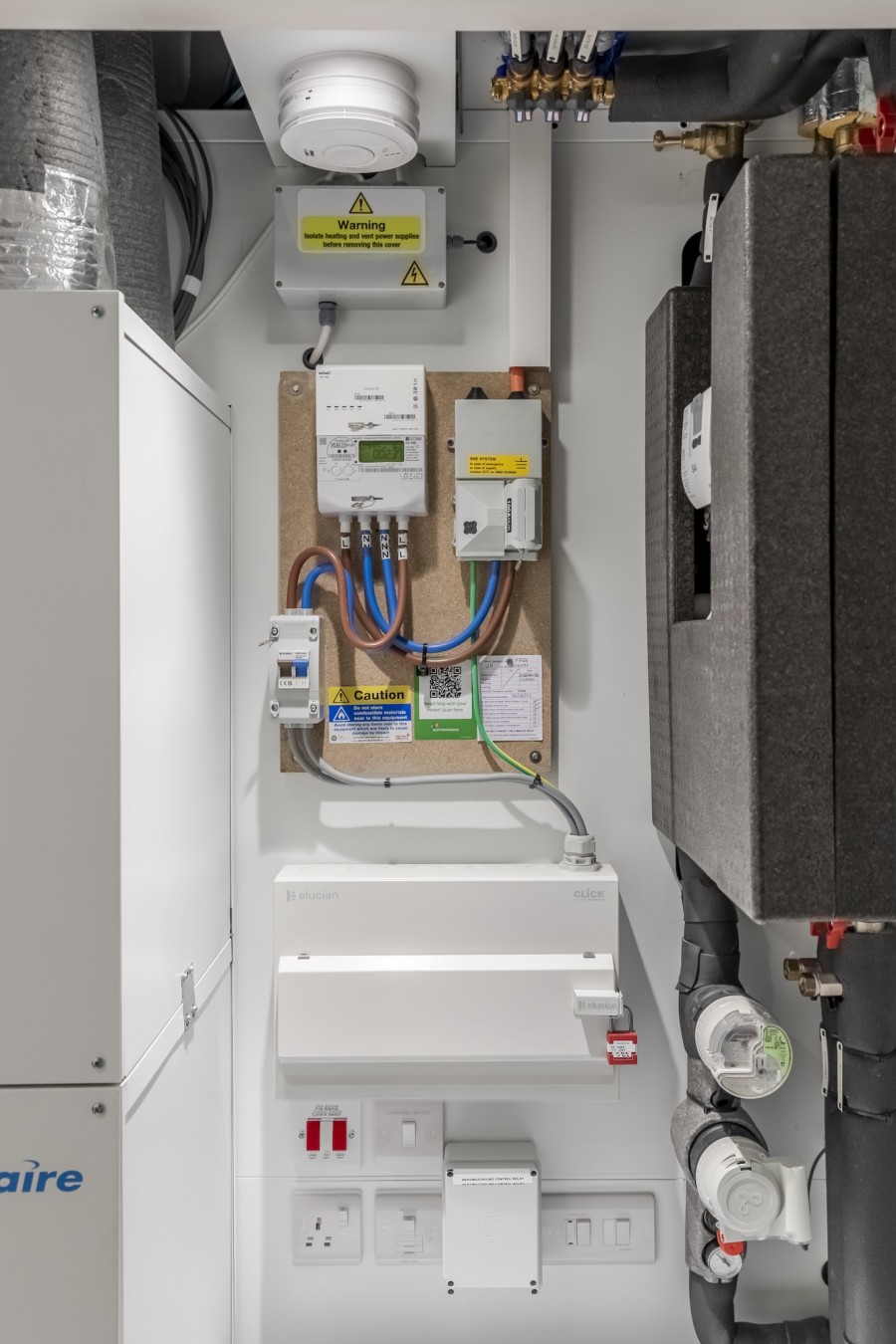
From heating and ventilation systems to electrical distribution and telecoms infrastructure, modern high-rise buildings rely on an intricate network of services across plant rooms, risers, corridors, and apartments. In each apartment, many of these services must be integrated within the confined space of a single utility cupboard, while also remaining easily accessible for maintenance and compliance with strict regulations.
Traditionally, these cupboards have been assembled onsite by multiple trades working sequentially within a very small footprint. However, as M&E systems become more complex, this approach is proving increasingly difficult to coordinate at scale.
Trades such as plumbers, electricians, dryliners, and flooring specialists must access the same space at different stages of the programme, often returning multiple times as installation progresses. This creates logistical challenges, introduces the risk of delays, and increases the potential for clashes, rework, and snagging. In high-rise projects with hundreds of apartments, even small inefficiencies can multiply quickly across the programme. As a result, some developers and contractors are turning to offsite solutions to simplify this process.
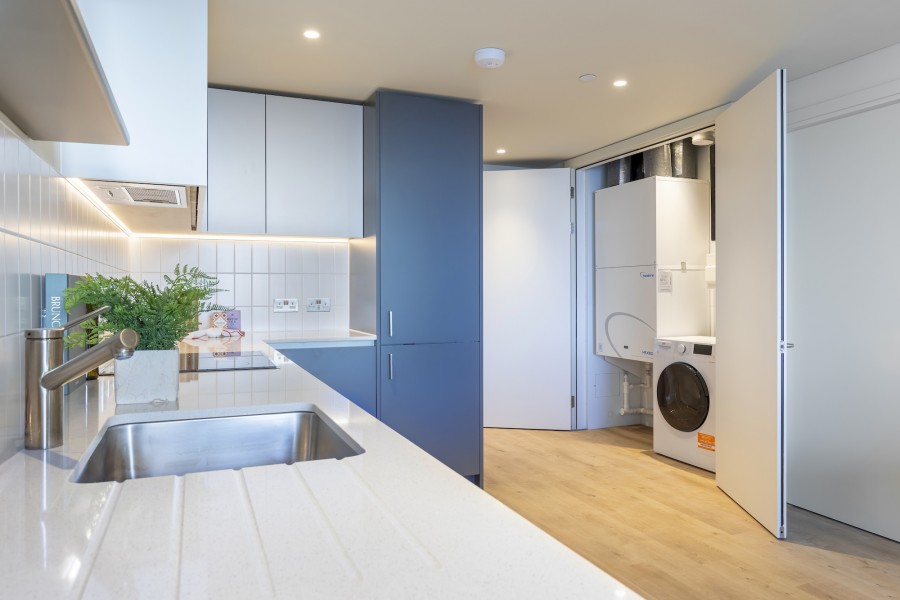
Prefabricated utility rooms offer an alternative approach by shifting much of the installation work from the building site into a controlled factory environment. Instead of assembling the M&E services within each apartment individually, the entire utility room can be designed, built, and tested offsite before delivery. This way, contractors can significantly reduce the number of trades required within the cupboard space, as the units are delivered to site ready to be installed and connected.
The approach is already being adopted on several large-scale residential developments across the country. At Elephant & Castle Town Centre, for example, Resipoint’s prefabricated utility rooms have been deployed to help deliver standard services plus a Heat Interface Unit, dual metering, and a Mechanical Ventilation with Heat Recovery (MVHR) system despite shallow cupboard depths, tight door spaces, and complex floor build-ups.
A similar approach has been used at Opus, Bankside Yards, where the standardised precision of Resipoint’s offsite prefabrication helped overcome severe spatial constraints, enabling the integration of ancillary equipment required for an ambient loop water source heat pump (WSHP) strategy – something that wouldn’t have been achievable with traditional onsite construction.
For developers and contractors seeking greater certainty around quality, coordination, and programme risk, prefabricated utility rooms offer a practical way to bring greater control to one of the most complex parts of modern residential construction.
Visit resipoint.co.uk to learn more about the benefits of prefabricated utility rooms.