New research has revealed a dangerous misconception among younger adults about how fire doors work, raising serious concerns about public safety in the buildings they use every day.
The survey, carried out by the British Woodworking Federation (BWF) to mark the launch of its Fire Door Safety Week campaign – Check it, close it: Protection starts at the door - found that shockingly, 38% of Gen Z respondents (aged 18 – 29) feel safe when a fire door is wedged open.
Meanwhile, almost three in 10 (29%) also believe that fire doors can be safely wedged open if smoke alarms are present in the building.
A fire door only protects people when it is closed, correctly installed and properly maintained, yet these findings suggest many younger adults do not fully understand this, which could put them at risk in the event of a fire.
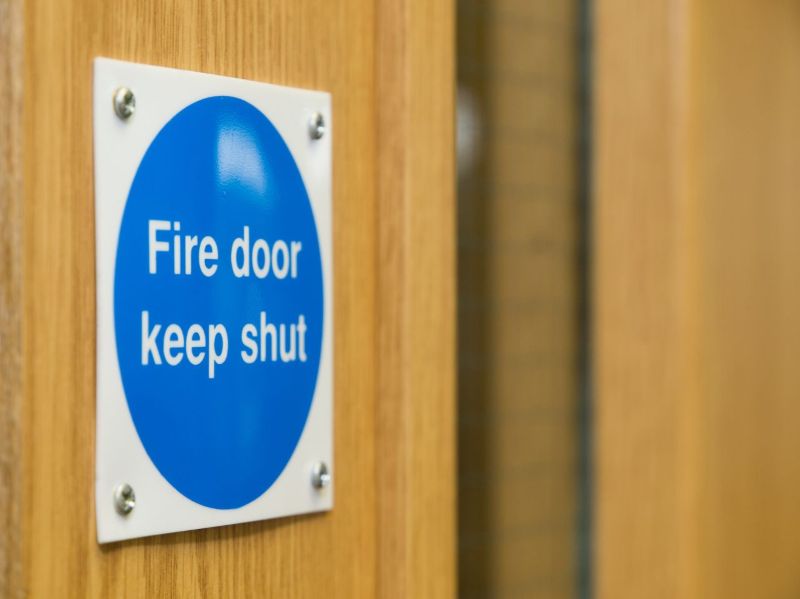
While smoke alarms provide a warning sign for building occupants, fire doors are designed to slow the spread of fire and toxic smoke and protect escape routes. If a fire door is wedged open, fire and smoke can spread through a building and potentially compromise escape routes, which allow occupants to evacuate and emergency services to enter.
When considering the role of a fire door, positively, 78% of Baby Boomers (aged 62 - 80) and 93% of the Silent Generation (aged 81+) understand that fire doors are designed to slow the spread of fire and smoke and help people escape a building. However, this understanding is significantly lower among Gen Z, with only 40% stating they understand the role of a fire door.
Despite this, younger adults are paying attention to fire doors in the buildings they use. Almost two-thirds (63%) of Gen Z say they notice where fire doors are located when entering an unfamiliar building, while 59% notice their condition. This provides a firm foundation for further education around how to identify fire doors correctly and understand the role they play in protecting building occupants.
When considering sources of fire door education, 33% of Gen Z cite social media compared to other generations which state workplace training. With a rise in misinformation on social platforms, the findings clearly highlight the importance of providing younger audiences with clear and accurate information from reputable sources on how to recognise a fire door, what it is designed to do and why it must remain closed.
The need for education was further highlighted by research identifying misconceptions around how fire doors can be identified, with 21% of Gen Z and Millennials (aged 30 – 45) believing a fire door is simply a door painted red and 22% of Gen Z believing a fire door is a door painted with fire-resistant paint.
Helen Hewitt, CEO of the British Woodworking Federation (BWF), said: “The fact that more than one in three Gen Z adults feel safe when a fire door is wedged open is deeply concerning and creates a dangerous false sense of protection. A wedged-open fire door cannot fulfil its life-saving role. Fire doors are designed to hold back the spread of fire and smoke, protecting emergency escape routes to give people vital time to escape and emergency services time to enter a building.
“Fire doors are not ordinary doors and should never be held or wedged open for convenience, without using a correctly installed automatic door closer. Only a correctly installed, maintained and, importantly, closed, fire door can stop the spread of smoke and fire.
“It’s clear that greater awareness and education is needed so that people of all ages recognise that fire doors are a crucial part of the wider system of passive fire protection. By sharing accurate information and increasing visibility of the role of fire doors, we can turn recognition into understanding and action to improve fire door safety.”
The knowledge gap also extends to what people should do when they spot a potential problem with a fire door. Almost half (48%) of Gen Z respondents believe a damaged fire door should be reported and 45% say that poor maintenance of fire safety measures is a concern in public buildings.
However, when asked why they might not report an issue with a fire door, respondents identified a lack of knowledge to spot a problem, uncertainty over who to report an issue to, and assuming someone else would deal with it as the main barriers. Insufficient knowledge was the leading barrier for Gen Z (29%) and Millennials (27%), while Baby Boomers (30%) and the Silent Generation (67%) were most likely to say they would not know who to contact. For Gen X, the most common barrier was assuming someone else would deal with it (27%).
Damage, missing components and poor maintenance can all prevent a fire door from working as intended, and in the event of a fire, the consequences can be life changing. Together these findings, underline the need for greater education over fire doors, how to spot maintenance issues and vitally, how to report them for remediation.
Positively, 79% of people believe that those responsible for installing and maintaining fire doors should have specialist qualifications or accreditations to demonstrate their skills and competence. This suggests strong public support for fire door installation and maintenance being carried out by appropriately skilled and competent professionals.
Helen Hewitt added: “Building occupants and users should never assume that someone else will raise a concern about a fire door’s condition. Leaving a damaged, obstructed or poorly maintained fire door unreported could mean the difference between life and death in the event of a fire.
“If something looks wrong with a fire door – whether it’s damaged, wedged or obstructed – report it straightaway and follow up until it’s fixed. Building owners and responsible persons can help with encouraging a proactive fire safety reporting environment by making reporting processes for their properties clear, accessible and visible.
“Fire door safety depends on everyone playing their role – from building users spotting and reporting issues, to landlords, building owners and Responsible Persons ensuring competent individuals with the correct skills, knowledge and experience complete remediation work.”
Fire Door Safety Week was launched in 2013 by the British Woodworking Federation to improve awareness and understanding of the vital role that fire doors play in protecting life and property and to promote industry best practice across all building types. This year’s findings underline the importance of helping people move beyond noticing fire doors to understanding how they work, why they must remain closed and what action to take if there is a problem.
More information, guidance and campaign materials are available on the Fire Door Safety Week website: Fire Door Safety Week.