A typical home now has more connected devices within it than ever before; iPads, connected TVs and music streaming systems such as Spotify enable us to stay connected to each other and to consume content far more quickly.
As a result, the Internet has become the new fourth domestic utility, and home buyers are already basing housing location decisions on the availability of high-speed broadband.
Providers such as Virgin are building entire business models on this, offering lightning-fast connections capable of high-definition movie streaming to multiple rooms at once.
If you believe the hype from leading IT companies such as Cisco, we’re only a few years from the truly connected home – with fridges, ovens and even cleaning robots all networked together, talking to one another and to the internet.
However, as the requirement for faster speeds and the number of gadgets being used at any one time increases, the current generation of consumer wireless networking technology used within the home struggles to keep up with demand - and that’s without adding drop-outs caused by nearby networks, thick walls and other devices such as microwaves to the mix.
In larger properties, the equipment offered by broadband suppliers with each new connection simply can’t transmit far enough to provide a robust connection to all rooms – leading to frustration and that dreaded ‘buffering’ notice or spinning circle on-screen.
But this is a consumer issue, right? Why should I care what is installed after an owner moves in?
“Internet ready” homes
Imagine being able to offer potential purchasers an “internet-ready” home. Imagine being able to guarantee reliable connectivity in all rooms, whatever broadband supplier the purchaser may choose, from the day a homebuyer moves in. Imagine being able to offer all four home utilities – water, gas, electricity and data. This represents an increasingly significant selling point for new home developers and brownfield redevelopers alike.
Of course, this has technically been possible for years - structured network cabling is generally specified in most professional buildings as standard. However, the installation of network cable as standard in walls and ceilings within the residential market has been, and will always be, unheard of. The running of such cable is an enormously expensive and time-consuming job – no wonder, then, that it hasn’t been top of housing specifiers’ lists.
So how can you offer homebuyers the benefits of structured cabling without significant expenditure, at a time in the purchase process that such a requirement is confirmed as being important to the homeowner?
Enter Powerline Communications (PLC) – a technology invented in the 1950s to control street lighting and emerging into the consumer market in 2001 under the moniker ‘HomePlug’.
Using sophisticated technology, Internet data is transmitted down mains power lines - electrical cables are transformed into electrical and data cables with no extra wiring or thought required.
Walled in
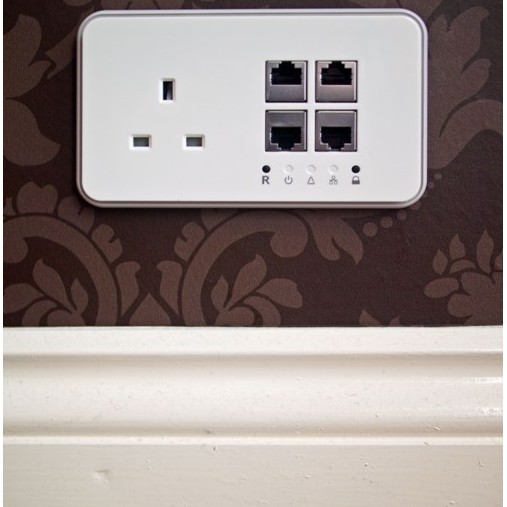
But while the technology isn’t new, the opportunity to specify this technology at or before point of sale is – and has arisen through a shift in device form factor. This change is as simple as it is effective; moving Powerline components from a separate, temporary adapter to actually embedding them within a plug socket itself, tucked away neatly within a wall.
No extra connections are required over the standard live, neutral and earth connections. This design shift from a consumer plug to a device that is hard-wired into the very fabric of a building’s electrical infrastructure makes it less compelling for the plug-and-play consumer and far more interesting to specifiers – who can arrange for Powerline sockets to be installed right up to the day a new owner moves in, with minimal disruption and over a short period of time.
With the recent prediction by electronics giant Qualcomm that there will be 24 billion connected devices in use globally by 2020, a home’s propensity to allow fast and reliable data communication between its rooms and the devices used within them is certain to become a vital selling point for any prospective homebuyer.
With this in mind, the housing specification market must begin to include data within its remit. Powerline technology offers specifiers the opportunity to capitalise on the explosion of new home technology and upsell new or refurbished homes to truly connected, “internet ready” homes that homeowners can be assured will reliably handle all of their Internet and data needs now – and also ensure their investment can evolve effortlessly into the connected home of the future.