Many inner city homeowners are making the switch from traditional fuel supplies to green energy alternatives according to Green Square, one of the UK’s leading renewable energy companies.
However, according to the latest Renewable Heating Incentive application statistics, London, Manchester and other major cities, are still significantly lagging behind their rural counterparts when it comes to fuelling their homes with green energy.*
For urban housing where space is often limited and properties are older and not well insulated, installing renewable energy technology is more challenging than in off grid rural properties, where the decision to switch from oil or LPG to a green, and significantly cheaper alternative, is often the obvious answer.
However there are suitable renewable energy combinations emerging as front runners for inner city homeowners looking to reduce their carbon footprint and save money on fuel bills.
Biomass stoves, which burn easy to store pellets, are not only aesthetically pleasing as a focal point in a room but in the cooler months provide heat and hot water to the home.
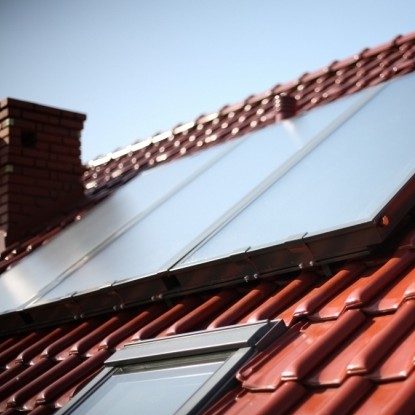
In addition, installing solar thermal panels means that the water for the house is heated for free throughout the summer without having to use the stove at all. What’s more, opting for solar thermal panels means the average house will only need two panels installed on the roof taking up around 3-4m² as opposed to solar PV which takes up around 10m².
Jared Sneath, Centre Manager at Green Square, Raynes Park says: “With renewable energy it’s usually not a ‘one size fits all’ solution, however, for those living in inner cities, there are options emerging such as biomass stoves and solar thermal which are perfectly suited to a variety of homes.”
“Combining these two green technologies with a thermal store is the solution to multi-fuel heating and optimising the technologies installed – however getting expert advice to explore the range of products available and what works best for each individual home, large or small, is recommended.”
The government’s Renewable Heat Incentive (RHI) pays participants who are using renewable energy to heat their homes. Depending on the technology installed, the domestic RHI pays varying tariffs per kWh over seven years.
For homeowners wanting to benefit most from the scheme, the best green option comprises a biomass stove, solar thermal panels and a thermal store.